تخيّل مسافرًا يحمل بطاقة صعود صحيحة، لكنه لا يعرف أين يتجه، ولا متى يصل إلى البوابة، ولا من يسأل إذا تغيّر مسار رحلته. كل المعلومات موجودة، ومع ذلك قد تفوته الطائرة.
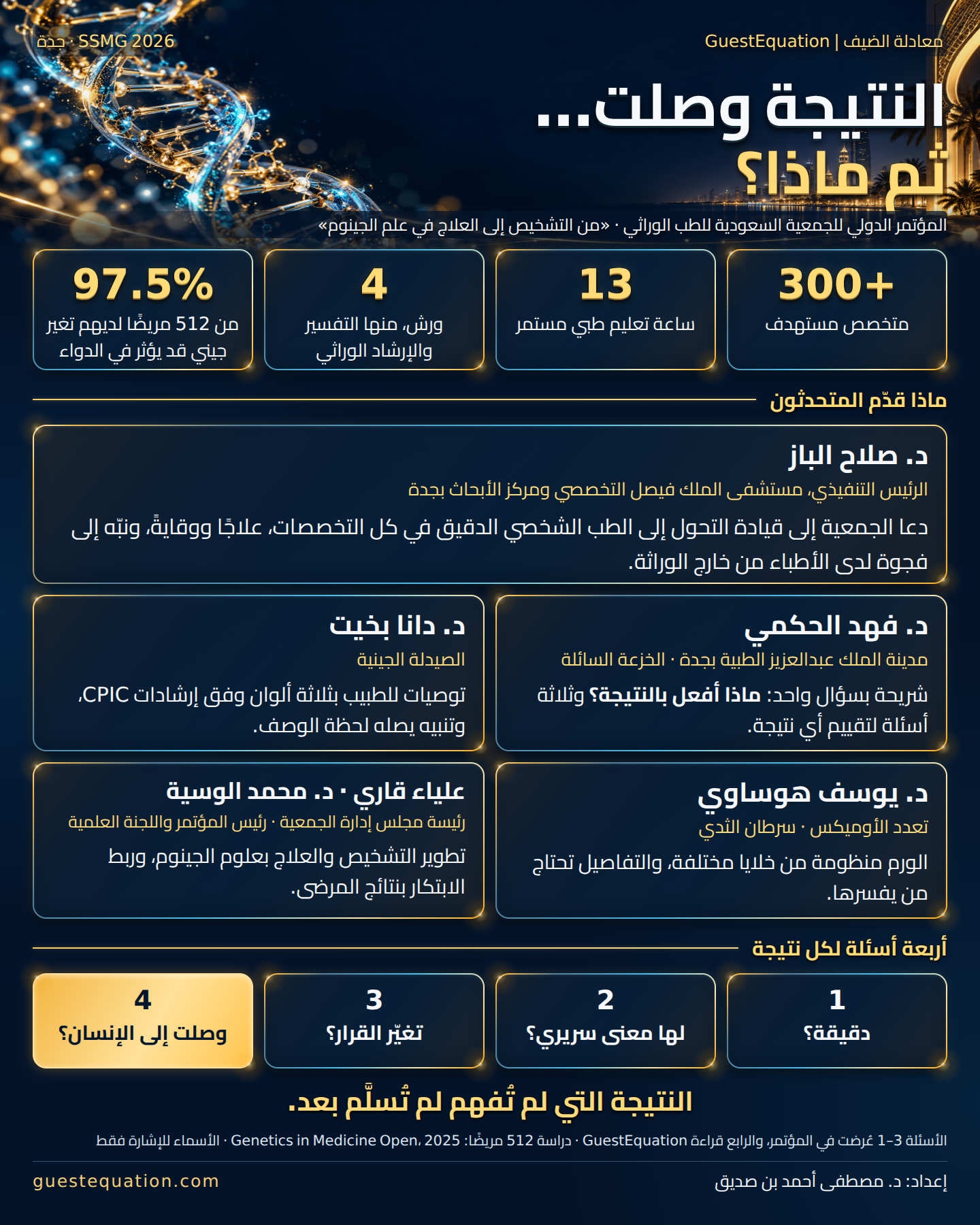
رافقني هذا المشهد يومي 30 سبتمبر و1 أكتوبر في جدة، خلال المؤتمر الدولي للجمعية السعودية للطب الوراثي SSMG 2026، الذي انعقد تحت شعار «من التشخيص إلى العلاج في علم الجينوم». استهدف المؤتمر أكثر من 300 متخصص، وقدّم 13 ساعة تعليم طبي مستمر معتمدة من الهيئة السعودية للتخصصات الصحية، وأربع ورش عمل. وأوضحت المستشارة الوراثية علياء عبدالرحيم قاري، رئيسة مجلس إدارة الجمعية، اهتمام المؤتمر بتطوير التشخيص والعلاج عبر علوم الجينوم والطب الدقيق. وربط د. محمد خالد الوسية، رئيس المؤتمر ورئيس اللجنة العلمية، الابتكار الجينومي بتحسين الرعاية ونتائج المرضى. [1]
وفي الافتتاح، وجّه د. صلاح الباز، راعي المؤتمر من مستشفى الملك فيصل التخصصي، دعوة صريحة. أشاد بما قدمته الجمعية في البحث العلمي وأمراض الوراثة النادرة، ثم قال إن المرحلة تتطلب انتقالًا أوسع: أن تقود الجمعية التحول إلى الطب الشخصي الدقيق في كل التخصصات، في الأعصاب والقلب والأورام والكلى والكبد، في العلاج والوقاية معًا. وأشار إلى فجوة واسعة لدى الأطباء من خارج تخصص الوراثة في فهم الجينوم وتطبيق الطب الدقيق المبني على ملف المريض. [2]
استوقفتني هذه الدعوة لأنها تقول بلغة الطب ما تقوله صناعة الضيافة منذ سنوات. انتقل العلم من علاج المرض إلى علاج هذا الإنسان بعينه. وهذه النقلة نفسها التي قطعتها الخدمة حين تركت المعاملة الموحدة إلى تقسيم الشرائح، ورسم الشخصيات، وخرائط الرحلة، وصولًا إلى تجربة مصممة لكل ضيف. تعودنا أن نسأل عن القهوة المختصة، وجاء وقت الطب المختص بك. لكن الطب الشخصي الدقيق لا يكتمل بنتيجة دقيقة. يحتاج إلى تجربة شخصية دقيقة بالقدر نفسه، وإلا وصلت المعلومة المخصصة إلى إنسان لا يعرف ماذا يفعل بها.
بين التشخيص والعلاج محطة لا يذكرها الشعار، لكن الجلسات انتهت عندها واحدة بعد أخرى: الفهم. في محاضرة د. فهد الحكمي من مدينة الملك عبدالعزيز الطبية بجدة عن الخزعة السائلة، حملت إحدى الشرائح سؤالًا بسيطًا: ماذا أفعل بالنتيجة؟ وطرح ثلاثة أسئلة لتقييم أي نتيجة: هل القياس دقيق؟ وهل له معنى سريري؟ وهل يغيّر ما نفعله للمريض؟ وأضيف إليها، من منظور تصميم التجربة، سؤالًا رابعًا: هل وصلت النتيجة إلى الإنسان بطريقة يفهمها ويتصرف على أساسها؟ [2]
الاختبارات الأربعة لأي نتيجة: الدقة، والمعنى السريري، والأثر في القرار، والوصول إلى الإنسان.
ولم يكن هذا السؤال غريبًا عن برنامج المؤتمر. فاثنتان من ورشه الأربع خُصصتا لتفسير النتائج الجزيئية وللإرشاد الوراثي، إلى جانب ورشتي الطوارئ الاستقلابية والتغذية العلاجية. أي أن المؤتمر نفسه وضع المسافة بين التقرير والإنسان في صلب التعليم الطبي. [1]
تبدأ الرحلة قبل أخذ العينة. يحتاج المريض إلى فهم السؤال الذي يحاول الفحص الإجابة عنه، وما قد يكشفه، وما قد يبقى دون جواب. وتحتاج الأسرة إلى مساحة لأسئلتها قبل القرار. وقد عُرض في المؤتمر أن جودة فحص الحاملين للأمراض الوراثية ترتبط باختيار الحالات والفئات والتقنيات المناسبة، وبالتفسير والإرشاد الملائمين. [2]
ثم تصل النتيجة، وتبدأ أكثر نقاط الرحلة حساسية. من يشرحها؟ ومن يربطها بالسؤال الذي طُلب الفحص من أجله؟ ومن يوضح ما سيحدث الآن؟ قد تنتقل الوثيقة بين المختبر والعيادة والأسرة، وتبقى هذه الأسئلة بلا صاحب. هنا يقع ما أسميه الإغلاق الوهمي: يُرسل الملف، فيبدو الأمر منتهيًا في سجلات الجهة، ولم يحدث بعد الحوار الذي يحتاجه المريض.
النتيجة التي لم تُفهم لم تُسلَّم بعد.
وتأتي المتابعة لتختبر اتساق الرحلة. إذا كانت النتيجة تستدعي إجراءً، فمن يتابع تنفيذه؟ وإذا لم تستدعِ تغييرًا الآن، فهل شُرح السبب؟ عُرض في المؤتمر نقص في المستشارين الوراثيين واختصاصيي تغذية الاستقلاب، وهي فجوة تجعل وضوح الأدوار بين التخصصات أكثر إلحاحًا. [2]
وعلى طرف العلاج من الشعار، يصبح الوقت جزءًا من النتيجة. عُرض في المؤتمر أن علاج ضمور العضلات الشوكي له نافذة قبل ظهور الأعراض، وأن العلاج الجيني نقل الهدف من النجاة إلى جودة حياة دائمة. في مثل هذه الحالات لا يعني تأخر الفهم تأخرًا في الخدمة وحدها، بل قد يعني وقتًا علاجيًا لا يعود. [2]
وكان أوضح جواب رأيته عن فجوة الأطباء التي تحدث عنها الافتتاح عرض د. دانا بخيت عن الصيدلة الجينية. وهي المؤلفة الرئيسية لدراسة من مستشفى الملك فيصل التخصصي شملت 512 مريضًا من أقسام القلب والأعصاب، ووجدت أن 97.5% منهم يحملون جينًا واحدًا على الأقل بوظيفة متغيرة قد تؤثر في الاستجابة للدواء. [3] لكن الرقم وحده لا يغيّر وصفة. ما لفتني أن العرض انشغل بالطبيب الذي سيقرأ النتيجة بقدر انشغاله بالنتيجة نفسها. رُتّبت التوصيات بثلاثة ألوان مبنية على إرشادات CPIC الدولية: استخدم الجرعة المعتادة، أو فكّر في بديل، أو تجنّب الدواء. وعُرض تنبيه يصل إلى الطبيب داخل نظامه الإلكتروني لحظة الوصف، بدل ملف ينتظر من يفتحه. [2]
هنا تتسع المعادلة: الطبيب ضيف أيضًا. إذا احتاج إلى جهد إضافي ليجد التوصية ويثق بها، فلن يصل التقرير الأوضح إلى الوصفة. وجودة التقرير تُقاس بما يصل منه إلى قرار الطبيب، لا بعدد صفحاته.
وللنتيجة تاريخ أيضًا. تناولت مواد المؤتمر إعادة تحليل الإكسوم والعودة إلى المتغيرات ذات الدلالة غير المؤكدة مع تقدم المعرفة. فمن يحتفظ بمسؤولية العودة إلى الملف؟ وكيف يعرف المريض أن تفسير نتيجته قد يحتاج إلى مراجعة؟ [2]
ويزيد تعقّد العلم أهمية هذا الوضوح. ففي محاضرته عن تعدد الأوميكس وتسلسل الخلية الواحدة في سرطان الثدي، عرض د. يوسف هوساوي من مستشفى الملك فيصل التخصصي بجدة الورم بوصفه منظومة تضم أنواعًا مختلفة من الخلايا. [4] ويقدّم الذكاء الاصطناعي دعمًا للتحليل وتكامل البيانات، كما عُرض في المؤتمر، مع بقاء المسؤولية المهنية عن القرار. وكلما اتسعت قدرة العلم على رؤية التفاصيل، ازدادت أهمية تنظيم ما يصل منها إلى الإنسان، ومن يفسّره له. [2]
من خبرتي في تصميم تجربة الضيف، أرى أن جودة الرحلة تُختبر عند انتقال الإنسان من خطوة إلى أخرى. وأقترح ثلاث ممارسات تُطوَّر مع المختصين:
ملخص يفهمه المريض، وتوصية تصل إلى الطبيب حيث يعمل.
خطة متابعة تحدد الخطوة التالية، ومن يملكها، ومتى.
طريق واضح للعودة إلى التفسير حين يرى الفريق المختص ذلك.
دعا الافتتاح الجمعية إلى قيادة الطب الشخصي الدقيق في كل التخصصات. وأضيف إلى هذه الدعوة شرطًا من خارج المختبر: أن يكون لكل نتيجة شخصية رحلة شخصية بالقدر نفسه، يعرف فيها المريض وطبيبه أين يقفان وما الخطوة التالية. فبطاقة الصعود لا تساوي شيئًا لمن لا يعرف بوابته.
سؤالي للممارسين: في جهتكم، حين تصل النتيجة، من يملك الخطوة التالية بالاسم؟
والمريض الذي يعيد رواية قصته عند كل نقطة اتصال يحمل دينًا لم يقترضه، يسدده من وقته وصبره. هذا هو دين الجهد، وإليه أعود في الحلقة القادمة من معادلة الضيف.
لمناقشة مراجعة رحلة فحص واحد في جهتكم، من الاستفسار حتى تسليم النتيجة والمتابعة: mustafa@guestequation.com
المصادر
الجمعية السعودية للطب الوراثي، صفحة المؤتمر وتغطية الافتتاح، 30 سبتمبر 2026؛ وتغطيات صحيفتي أحوال وسبق. conference.ssmg.org.sa
ملاحظات الكاتب وتسجيله لكلمة الافتتاح والجلسات العامة، 30 سبتمبر – 1 أكتوبر 2026؛ وتغطية صحيفة النهار. ما نُقل صيغ بالمعنى، ومقترحات التجربة قراءة الكاتب.
Bakheet D, et al. دراسة الصيدلة الجينية في مستشفى الملك فيصل التخصصي، Genetics in Medicine Open، 2025.
د. يوسف هوساوي، محاضرة تعدد الأوميكس وتسلسل الخلية الواحدة في سرطان الثدي، 30 سبتمبر 2026.
SSMG 2026 · Jeddah
The result has arrived. What happens next?
The last mile of precision medicine
Dr. Mustafa Ahmed Binsiddiq · Founder, GuestEquation™
Picture a traveller with a valid boarding pass who does not know where to go, when to reach the gate, or whom to ask if the flight changes. Every piece of information is there, and the flight can still be missed.
That picture stayed with me in Jeddah on 30 September and 1 October, at the Saudi Society of Medical Genetics International Conference, SSMG 2026, held under the theme Bridging Diagnosis to Treatment in Genomics. The conference was aimed at more than 300 specialists and offered 13 hours of continuing medical education accredited by the Saudi Commission for Health Specialties, along with four workshops. Society chair and genetic counsellor Alyaa Abdulrahim Qari described its focus on advancing diagnosis and treatment through genomics and precision medicine, and Conference Director and Chairman of the Scientific Committee Dr Mohammad Khalid Alwasiyah linked genomic innovation to better care and patient outcomes. [1]
At the opening, Dr Salah Al-Baz of King Faisal Specialist Hospital & Research Centre, the conference sponsor, made a direct appeal. He recognised the society's work in research and rare genetic disease, then argued that the moment calls for something wider: that the society should lead the move to personalised precision medicine across every specialty, from neurology and cardiology to oncology, nephrology and hepatology, in treatment and prevention alike. He also pointed to a wide gap among clinicians outside genetics in understanding the genome and practising medicine built on it. [2]
The appeal struck me because it says, in the language of medicine, what hospitality has been saying for years. Science has moved from treating a disease to treating this particular person. Service made the same move when it left one-size-fits-all behind for segmentation, personas and journey mapping, and finally for an experience designed around each guest. We learned to ask for specialty coffee; medicine is now asking what is specific to you. Yet personalised precision medicine is not complete with a precise result. It needs an equally personal, equally precise experience, or tailored information reaches a person who does not know what to do with it.
Between diagnosis and treatment sits a stop the theme does not name, and session after session ended there: understanding. In his lecture on liquid biopsy, Dr Fahad Al-Hakami of King Abdulaziz Medical City, Jeddah showed a slide asking a plain question: what do I do with the result? He set out three tests for any result. Is the measurement accurate? Does it carry clinical meaning? Does it change what we do for the patient? From an experience-design perspective I would add a fourth: has the result reached the person in a form they can understand and act on? [2]
Four tests for any result: accuracy, clinical meaning, effect on the decision, and reaching the person.
The question was not foreign to the programme. Two of the four workshops were devoted to interpreting molecular results and to genetic counselling, alongside metabolic emergencies and therapeutic nutrition. The conference itself placed the distance between report and person at the centre of medical education. [1]
The journey begins before a sample is taken. Patients need to understand the question a test is meant to answer, what it may reveal and what may stay unresolved. Families need room for their questions before a decision. Conference material on carrier screening tied quality to choosing the right conditions, populations and technologies, and to sound interpretation and counselling. [2]
Then the result arrives, and the most sensitive point of the journey begins. Who explains it? Who connects it to the question the test was ordered for? Who says what happens now? A document can travel between laboratory, clinic and family while those questions have no owner. This is what I call false closure: the file is sent, the case looks finished in the organisation's records, and the conversation the patient needs has not yet happened.
A result that has not been understood has not yet been delivered.
Follow-up tests whether the journey holds together. If action is needed, who makes sure it happens? If nothing needs to change now, has anyone explained why? Conference material pointed to shortages of genetic counsellors and metabolic dietitians, which makes clear roles across specialties all the more pressing. [2]
At the treatment end of the theme, time becomes part of the result. The conference heard that spinal muscular atrophy has a treatment window before symptoms appear, and that gene therapy has shifted the goal from survival to lasting quality of life. In cases like these, late understanding is not only a service delay; it can mean treatment time that does not come back. [2]
The clearest answer I saw to the clinician gap raised at the opening came from Dr Dana Bakheet's presentation on pharmacogenomics. She is lead author of a King Faisal Specialist Hospital study of 512 cardiology and neurology patients, which found that 97.5% carried at least one gene with altered function that may affect drug response. [3] A number alone changes no prescription. What stood out was how much attention the presentation paid to the doctor who will read the result. Recommendations were sorted into three colours based on international CPIC guidelines: use the standard dose, consider an alternative, or avoid the drug. And an alert was shown reaching the doctor inside the electronic record at the moment of prescribing, rather than a file waiting for someone to open it. [2]
This is where the equation widens: the doctor is a guest too. If finding and trusting a recommendation takes extra effort, even the clearest report will not reach the prescription. A report is measured by what reaches the doctor's decision, not by its page count.
A result also has a date. Conference material covered exome reanalysis and revisiting variants of uncertain significance as knowledge grows. Who keeps responsibility for returning to the file? And how does the patient learn that an interpretation may need review? [2]
Scientific complexity raises the stakes. In his lecture on multi-omics and single-cell sequencing in breast cancer, Dr Yousef Hawsawi of King Faisal Specialist Hospital & Research Centre, Jeddah, presented the tumour as an ecosystem of different cell types. [4] Artificial intelligence, as presented at the conference, supports analysis and data integration while professional responsibility for the decision remains. The more detail science can see, the more it matters how much of it reaches the person, and who explains it. [2]
My work in guest experience has taught me that a journey is tested at the transitions between steps. I would propose three practices, to be shaped with specialists:
A summary the patient can understand, and a recommendation that reaches the doctor where they work.
A follow-up plan naming the next step, its owner and its timing.
A clear route back to interpretation when the clinical team sees the need.
The opening called on the society to lead personalised precision medicine across every specialty. I would add one condition from outside the laboratory: every personal result deserves an equally personal journey, in which patient and doctor know where they stand and what comes next. A boarding pass is worth little to someone who cannot find the gate.
A question for practitioners: in your organisation, when a result arrives, who owns the next step, by name?
A patient who retells their story at every point of contact carries a debt they never borrowed, paid in time and patience. That is effort debt, and it is where the next episode of the GuestEquation series begins.
To discuss a review of one test journey in your organisation, from first inquiry to result delivery and follow-up: mustafa@guestequation.com
Sources
Saudi Society of Medical Genetics: conference page and opening coverage, 30 September 2026; Ahwal and Sabq coverage. conference.ssmg.org.sa
Author's notes and recording of the opening address and public sessions, 30 September – 1 October 2026; Al-Nahar coverage. Content is paraphrased; the experience-design proposals are the author's interpretation.
Bakheet D, et al. Pharmacogenomics study at King Faisal Specialist Hospital & Research Centre. Genetics in Medicine Open, 2025.
Dr Yousef Hawsawi, lecture on multi-omics and single-cell sequencing in breast cancer, 30 September 2026.
 GuestEquation™